

 Master Thesis Online


Doped ZnO nanoparticles for an antimicrobial and antiadhesive wound dressing: Sol-gel synthesis, characterization and photocatalytic evaluation of Cu-, Fe-, and N-Doped zinc oxide nanoparticles

Clémens, Stéphane 
Promotor(s) :
Lambert, Stéphanie
Date of defense : 30-Jun-2025/1-Jul-2025 • Permalink : http://hdl.handle.net/2268.2/23362
 All files (archive ZIP)
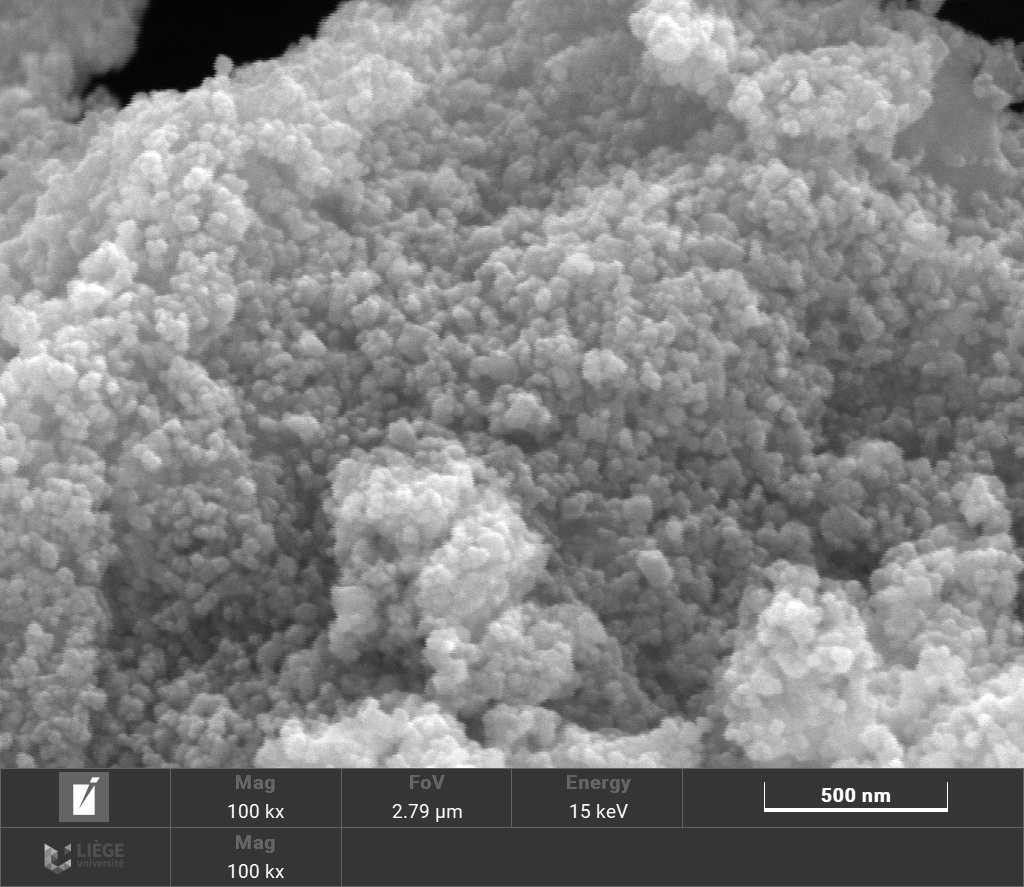 ZnOpur-C100kx.jpg
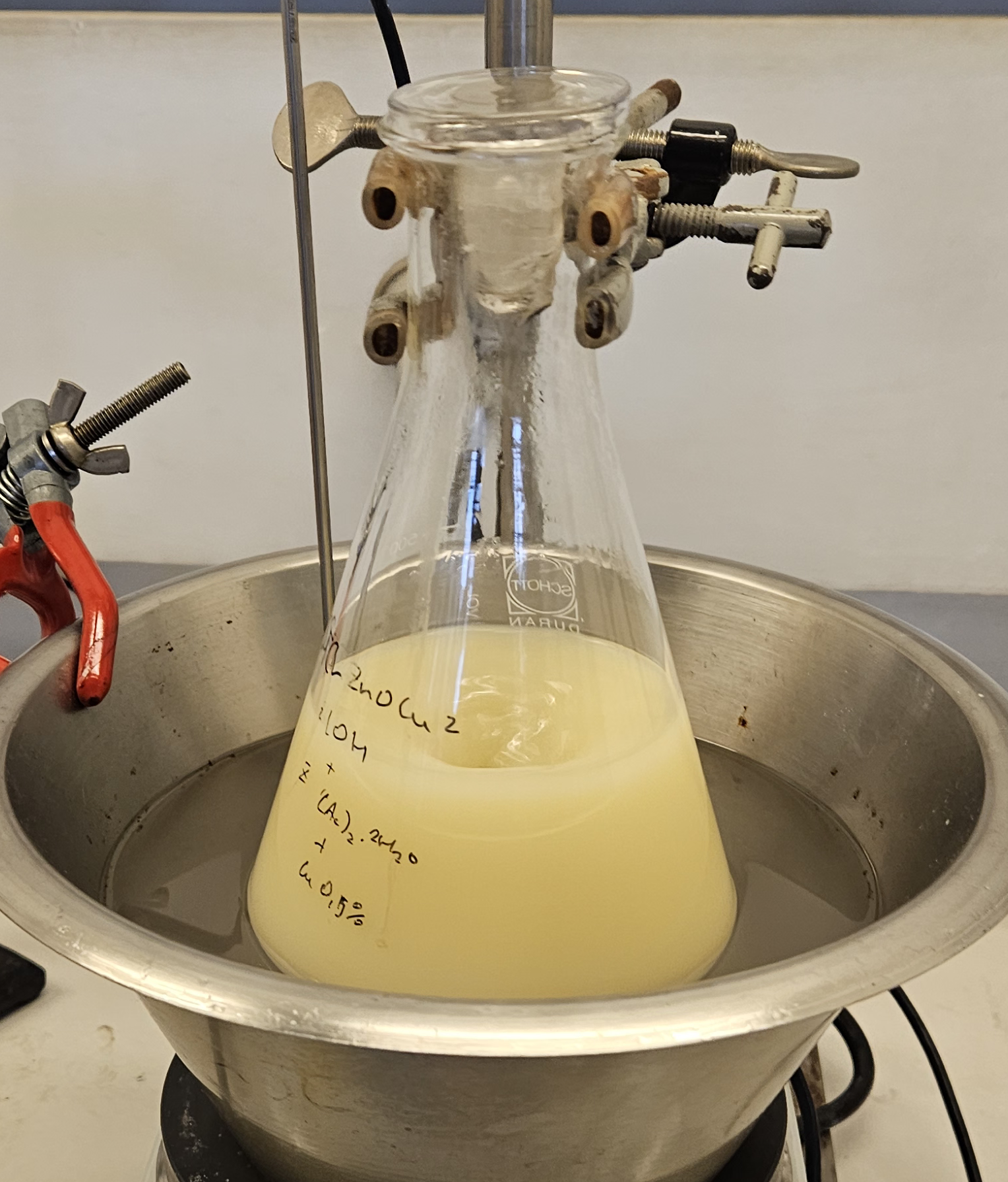 ZnOCuSOL.png
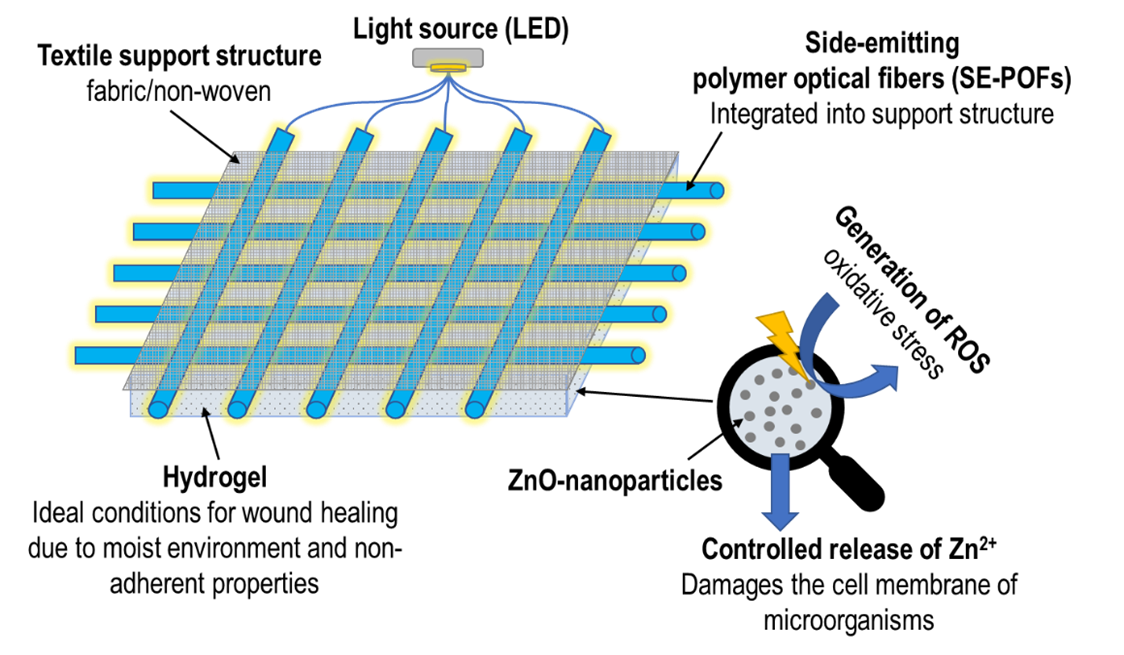 principeSmartMultiDress.png
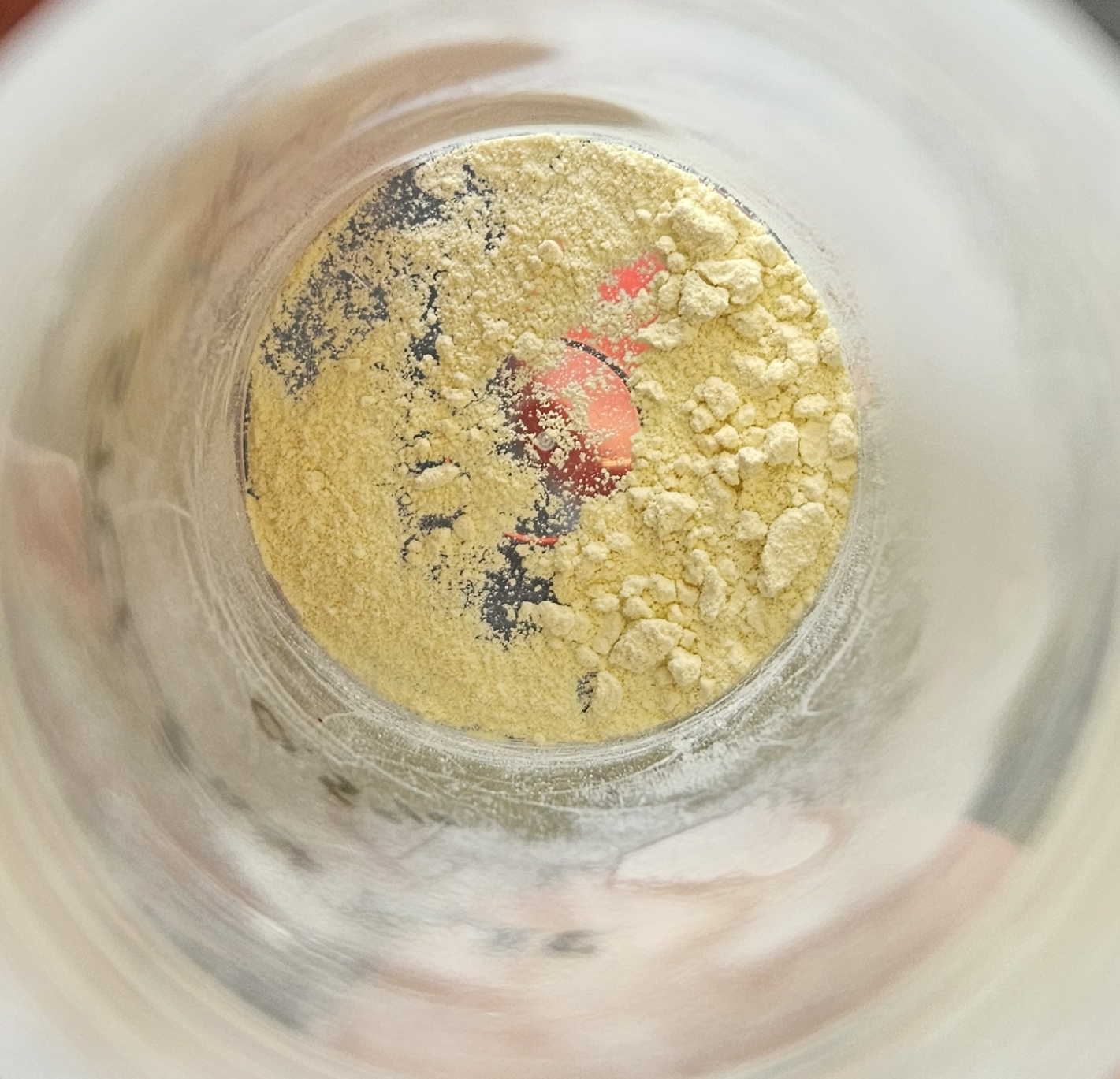 PoudreCalcineeFe.png
 BacteriakillerZnO.png
Details
| Title : | Doped ZnO nanoparticles for an antimicrobial and antiadhesive wound dressing: Sol-gel synthesis, characterization and photocatalytic evaluation of Cu-, Fe-, and N-Doped zinc oxide nanoparticles |
| Translated title : | [fr] Nanoparticules de ZnO dopées pour un pansement antimicrobien et antiadhésif : Synthèse sol-gel, caractérisation et évaluation photocatalytique de nanoparticules d'oxyde de zinc dopées au Cu, Fe et N |
| Author : | Clémens, Stéphane
|
| Date of defense : | 30-Jun-2025/1-Jul-2025 |
| Advisor(s) : | Lambert, Stéphanie
|
| Committee's member(s) : | Mahy, Julien
Tilkin, Rémi Léonard, Angélique
|
| Language : | English |
| Number of pages : | 90 |
| Keywords : | [en] Sol–gel synthesis [en] Photocatalysis [en] Wound dressing [en] Zinc oxide [en] Copper doping [en] Iron doping [en] Nitrogen doping [en] Antibacterial test [en] Photocatalytic degradation [fr] Synthèse sol-gel [fr] Photocatalyse [fr] Oxyde de zinc [fr] Dopage au cuivre [fr] Dopage au fer [fr] Dopage à l'azote [fr] Dégradation photocatalytique [fr] Test antibactérien |
| Discipline(s) : | Engineering, computing & technology > Chemical engineering |
| Name of the research project : | Projet SmartMultiDress |
| Target public : | Researchers Professionals of domain Student General public Other |
| Institution(s) : | Université de Liège, Liège, Belgique |
| Degree: | Master : ingénieur civil en chimie et science des matériaux, à finalité spécialisée en Chemical Engineering |
| Faculty: | Master thesis of the Faculté des Sciences appliquées |
Abstract
[en] Burn wounds are highly susceptible to bacterial infections, which can lead to severe complications and are increasingly difficult to treat due to the emergence of antibiotic-resistant strains. Conventional wound dressings often lack intrinsic antimicrobial activity and can adhere to the wound bed, causing pain and tissue damage during removal. As such, there is a pressing need to develop next-generation wound dressings that combine non-adhesive properties with effective antimicrobial action. This study, conducted within the European CORNET project SmartMultiDress, explores the use of doped ZnO nanoparticles as photocatalytic agents for such smart dressings that uses visible light to initiate the antibacterial reaction. Nanostructured ZnO powders were synthesized by a low-temperature sol-gel method using zinc acetate as precursor, potassium hydroxide as the base and ethanol as a solvent. Doping was introduced during synthesis using copper(II) nitrate, iron(III) nitrate, or various nitrogen-rich additives (urea, ethylenediamine, triethylamine). The powders were dried at low temperature and eventually calcinated at 500°C for 2 hours to improve crystallinity.
X-ray diffraction confirmed the presence of the hexagonal wurtzite ZnO phase across all compositions. Crystallite sizes ranged from 7-15 nm for non-calcinated samples and increased to 13-24 nm after calcination at 500°C, depending on dopant type. BET analysis revealed that all powders were macroporous, with calcination reducing surface area and pore volume. Among the dopants, pure non-calcinated zno preserved the highest specific surface area. SEM observations confirmed morphological changes between loosely packed nanograins in non-calcinated powders and more compact aggregates after heat treatment. ICP-AES confirmed dopant incorporation with concentrations close to the nominal values for example 0.96% Cu and 0.83% Fe in 1% samples.
Optical properties were analyzed by UV–Vis diffuse reflectance spectroscopy (DRS) and Tauc plots. Band gap values ranged from 3.25 to 3.29 eV, with Cu-doped samples showing the widest gap.
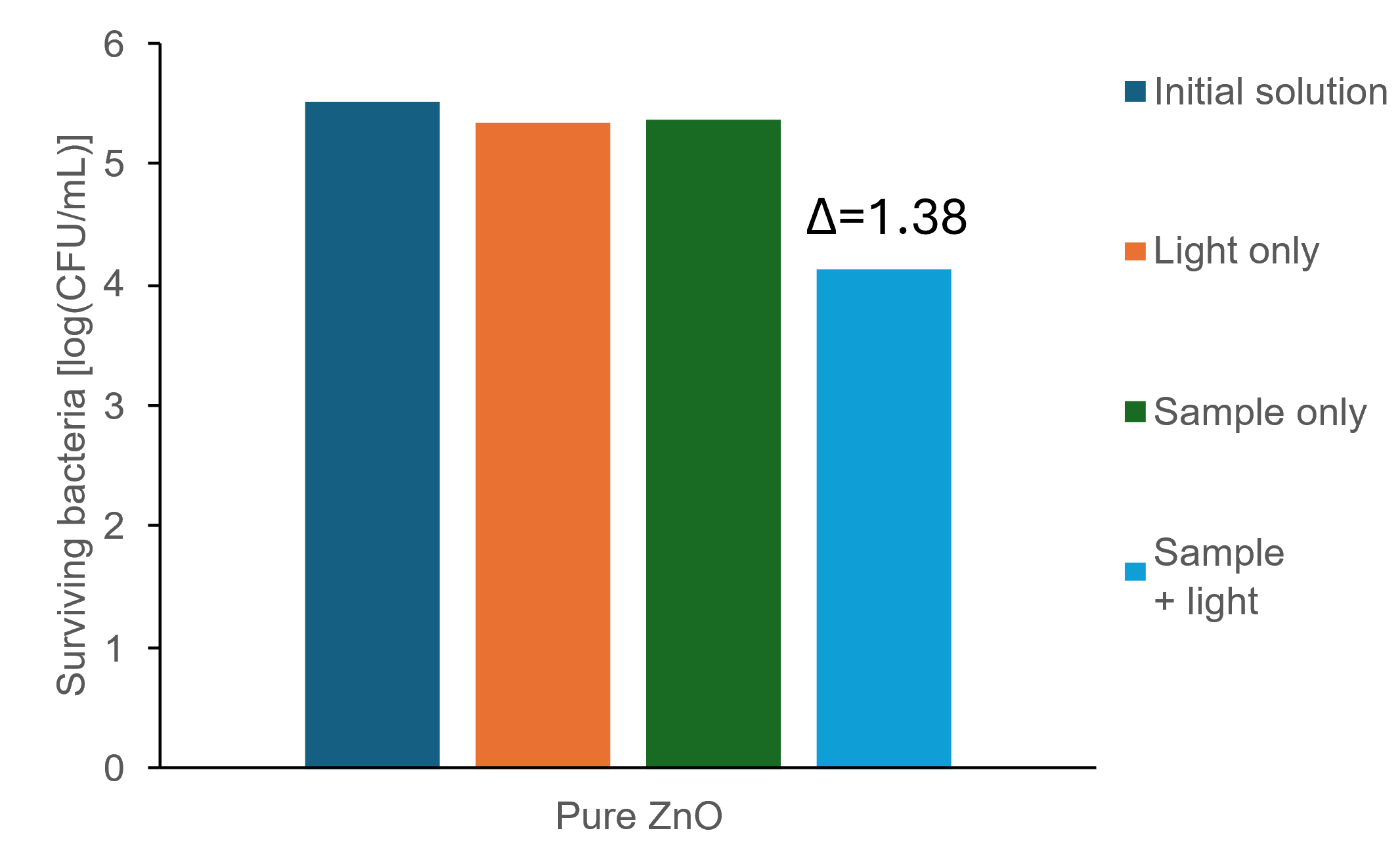
Photocatalytic performance was evaluated through p-nitrophenol degradation under visible light. Pure ZnO and N-doped ZnO (via ethylenediamine), calcinated for 2h, exhibited the best degradation rates when using optimized lamp configurations. Cu- and Fe-doped samples performed poorly under the same conditions. Antibacterial assays confirmed a significant reduction in Staphylococcus aureus for pure ZnO, whereas Cu-doped ZnO had negligible effect.
Pure ZnO samples showed some photocatalytic and antibacterial activity, but the dopants tested failed to enhance these effects. These results suggest that further work should explore alternative dopants such as Mn, refine synthesis conditions, and employ advanced characterization methods like XPS or TEM to better understand dopant incorporation and its effect on reactivity.
[fr] Les brûlures sont particulièrement susceptibles aux infections bactériennes, pouvant entraîner de graves complications et devenant de plus en plus difficiles à traiter en raison de l'émergence de souches résistantes aux antibiotiques. L'occurence croissante de ces souches complique davantage les traitements. Les pansements conventionnels manquent souvent d'activité antimicrobienne intrinsèque et peuvent adhérer à la plaie, causant douleur et lésions lors du retrait. Il est donc nécessaire de développer une nouvelle génération de pansements combinant des propriétés non adhésives et une action antimicrobienne efficace. Cette étude, réalisée dans le cadre du projet européen CORNET SmartMultiDress, explore l'utilisation de nanoparticules de ZnO dopé comme agents photocatalytiques pour des pansements intelligents utilisant la lumière visible pour initier la réaction antibactérienne.
Des poudres nanostructurées de ZnO ont été synthétisées par une méthode sol-gel à basse température, en utilisant l’acétate de zinc comme précurseur, l’hydroxyde de potassium comme base, et l’éthanol comme solvant. Le dopage a été réalisé pendant la synthèse à l’aide de nitrate de cuivre(II), nitrate de fer(III) ou de différents additifs riches en azote (urée, éthylènediamine, triéthylamine). Les poudres ont été séchées à basse température puis éventuellement calcinées à 500°C pendant 2 heures afin d’améliorer leur cristallinité.
La diffraction des rayons X a confirmé la présence de la phase hexagonale wurtzite du ZnO pour toutes les compositions. La taille des cristallites variait de 7 à 15 nm pour les échantillons non calcinés et augmentait de 13 à 24 nm après calcination à 500°C, selon le type de dopant. L’analyse BET a révélé que toutes les poudres étaient macroporeuses, la calcination réduisant la surface spécifique et le volume poreux. Parmi les dopants, le ZnO pur non calciné a conservé la surface spécifique la plus élevée. Les observations MEB ont confirmé les changements morphologiques entre des nanograins faiblement agglomérés (non calcinés) et des agrégats plus compacts après traitement thermique. L’ICP-AES a confirmé l’incorporation des dopants avec des concentrations proches des valeurs nominales, par exemple 0,96% de Cu et 0,83% de Fe pour les échantillons à 1%.
Les propriétés optiques ont été analysées par spectroscopie de réflectance diffuse UV–Vis (DRS) et par tracés de Tauc. Les valeurs de bande interdite s’étendaient de 3,25 à 3,29 eV, avec les échantillons dopés au cuivre présentant la bande la plus large.
Les performances photocatalytiques ont été évaluées par la dégradation du p-nitrophénol sous lumière visible. Le ZnO pur et le ZnO dopé à l’azote (via l’éthylènediamine), calcinés pendant 2 h, ont présenté les meilleurs taux de dégradation dans diverses configurations d’éclairage. Les échantillons dopés au cuivre et au fer ont montré de faibles performances dans les mêmes conditions. Des tests antibactériens ont confirmé une réduction significative de Staphylococcus aureus pour le ZnO pur, tandis que le ZnO dopé au cuivre n’a montré aucun effet notable.
Les échantillons de ZnO pur ont montré une certaine activité photocatalytique et antibactérienne, mais les dopants testés n'ont pas permis d'améliorer ces effets. Ces résultats suggèrent que des travaux futurs devraient explorer d’autres dopants tels que le manganèse (Mn), affiner les conditions de synthèse, et utiliser des méthodes de caractérisation avancées comme la XPS ou la TEM pour mieux comprendre l’incorporation des dopants et son effet sur la réactivité.
File(s)
Document(s)

 Erratum_TFE_S190730_StéphaneCLEMENS.pdf
Description: -
Size: 107.81 kB
Format: Adobe PDF
Annexe(s)


Cite this master thesis
The University of Liège does not guarantee the scientific quality of these students' works or the accuracy of all the information they contain.
