

 Master Thesis Online


Master's Thesis : 24GHz homodyne radar transceiver design

Kaschten, Vincent 
Promoteur(s) :
Vanderbemden, Philippe
Date de soutenance : 25-jui-2020/26-jui-2020 • URL permanente : http://hdl.handle.net/2268.2/9035
 Tous les fichiers (archive ZIP)
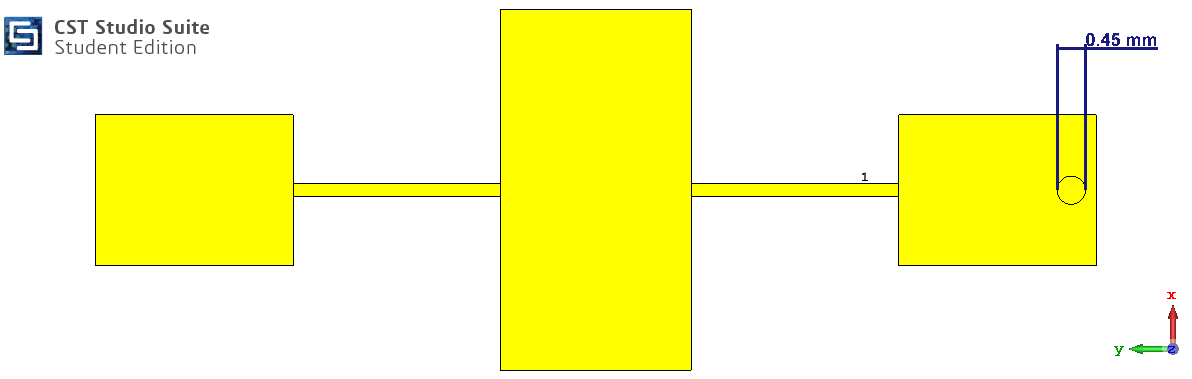 3X1_BEA_DIM.png
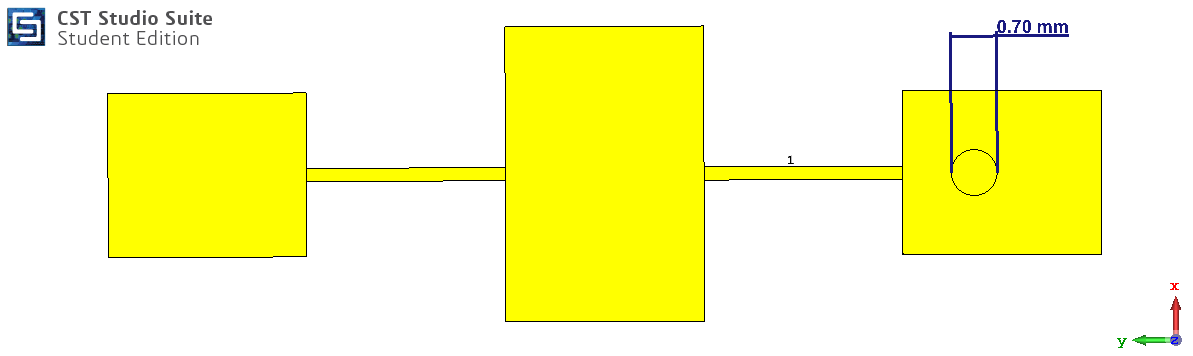 3X1_NEW_DIM.png
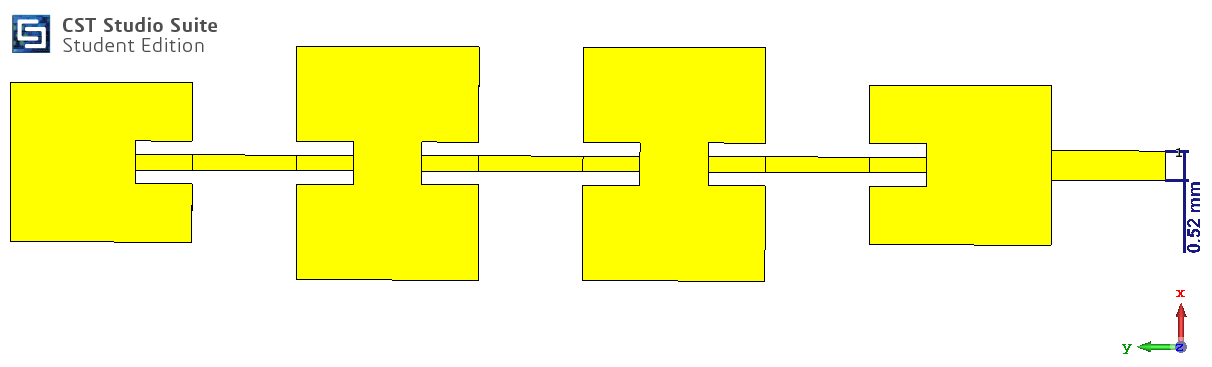 4X1_INSET_DIM.png
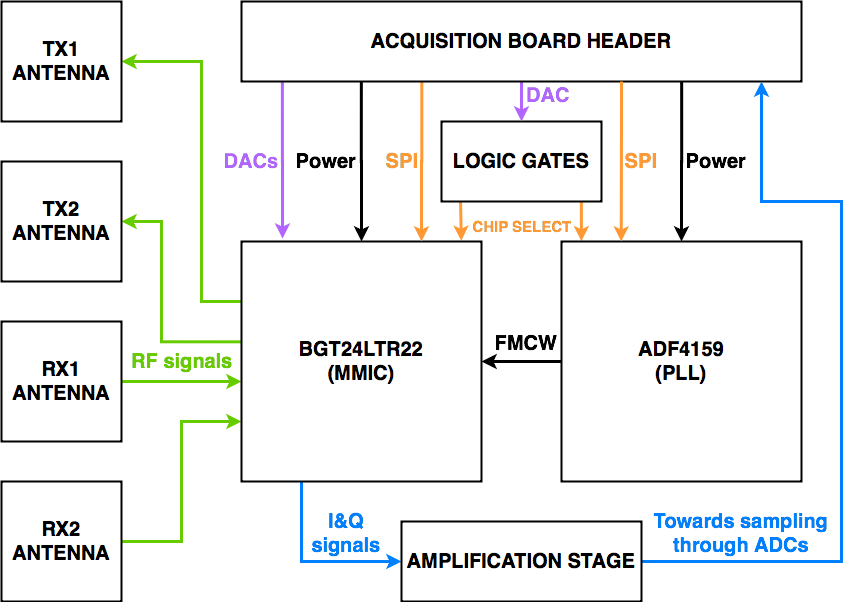 Hardware_architecture.png
Détails
| Titre : | Master's Thesis : 24GHz homodyne radar transceiver design |
| Titre traduit : | [fr] Réalisation d'un transceiver radar homodyne 24GHz |
| Auteur : | Kaschten, Vincent
|
| Date de soutenance : | 25-jui-2020/26-jui-2020 |
| Promoteur(s) : | Vanderbemden, Philippe
|
| Membre(s) du jury : | Torres, Annael
Vanderheyden, Benoît
Redouté, Jean-Michel
|
| Langue : | Anglais |
| Nombre de pages : | Entre 50 et 100 pages |
| Mots-clés : | [en] radar transceiver [en] patch antennas [en] CW radar [en] MIMO radar [en] automatic door |
| Discipline(s) : | Ingénierie, informatique & technologie > Ingénierie électrique & électronique |
| Centre(s) de recherche : | BEA Sensors Europe |
| Public cible : | Chercheurs Professionnels du domaine Etudiants |
| Institution(s) : | Université de Liège, Liège, Belgique |
| Diplôme : | Master : ingénieur civil électricien, à finalité spécialisée en "electronic systems and devices" |
| Faculté : | Mémoires de la Faculté des Sciences appliquées |
Résumé
[en] This thesis consists in the design of a new homodyne radar transceiver to be used in the context of automatic doors. The work focuses on the continuous wave mode (CW) which allows speed measurements, while the frequency modulated continuous wave (FMCW) – which allows range and speed measurements – was developed in a more theoretical way. The central component of this work is a new radar chip developed by Infineon (BGT24LTR22), working in the frequency band from 24GHz to 24.25GHz. It provides analog building blocks for radar applications and fea- tures two transmitting ports as well as two receiving ports. The first phase of this work concerns the antennas : three different types of patch antennas were designed with CST (either 4X1 or 3X1 arrays) with radiation patterns compatible with the automatic door market (elevation beamwidth of 60°). The EIRP was measured as 9.8dBm, 7.3dBm and 6.5dBm for the respective designs. The second phase deals with the transceiver’s architecture and its implementation on a printed circuit board, with Altium. Three different transceivers were designed, each one featuring one patch an- tenna type. The third phase includes the software development with Eclipse IDE, software which is meant to be embedded in an external acquisition board to sample the radar chip output signals. The processing of these signals with Matlab includes a Constant False Alarm Rate algorithm. Dif- ferent tests are performed on the transceivers in the CW mode. Signal-to-noise ratios of 21dB, 18dB and 16dB were respectively measured for each transceiver design. The detection of people in motion is validated with a speed resolution of 0.5km/h. Taking advantage of the MIMO configu- ration (two TX antennas and two RX antennas), it is possible to determine the angle of arrival of detected people. Only one TX antenna was used, because large transient responses were observed when switching between both. Nevertheless, with two RX antennas, we finally demonstrated the ability of the transceivers to separate people at different speeds with an angular precision of 30°, and to reject the parallel flow of people who do not wish the door to open.
Fichier(s)
Document(s)

 TFE Vincent Kaschten.pdf
Description: Thesis Report
Taille: 32.15 MB
Format: Adobe PDF
Annexe(s)
 CW_non_coherent_process.pdf
Description: Non-coherent processing
Taille: 570.33 kB
Format: Adobe PDF
4X1_test4_small_angles.pdf
Description: Test 4 : different speeds
Taille: 54.52 kB
Format: Adobe PDF

Citer ce mémoire
L'Université de Liège ne garantit pas la qualité scientifique de ces travaux d'étudiants ni l'exactitude de l'ensemble des informations qu'ils contiennent.
