

 Master Thesis Online


Feasibility of geothermal energy in the Belgian deep railway tunnels: case of the Liefkenshoek tunnel

Noubi Tchoupe, Audrey Shelsi 
Promoteur(s) :
Dewallef, Pierre
Date de soutenance : 8-sep-2025/9-sep-2025 • URL permanente : http://hdl.handle.net/2268.2/24564
 Tous les fichiers (archive ZIP)
 posi_cap.png
 ligning.png
 closed_sys.png
 geotherm.png
Détails
| Titre : | Feasibility of geothermal energy in the Belgian deep railway tunnels: case of the Liefkenshoek tunnel |
| Titre traduit : | [fr] Faisabilité de la géothermie dans les tunnels ferroviaires profonds belges : cas du tunnel de Liefkenshoek |
| Auteur : | Noubi Tchoupe, Audrey Shelsi
|
| Date de soutenance : | 8-sep-2025/9-sep-2025 |
| Promoteur(s) : | Dewallef, Pierre
|
| Membre(s) du jury : | Lemort, Vincent
François, Bertrand
Depauw, Bart |
| Langue : | Anglais |
| Nombre de pages : | 66 |
| Mots-clés : | [en] Geothermal energy [en] Heat pump [en] Tunnel [en] Thermal resistance [en] Analytical model [en] Heat transfer fluid [en] Liefkenshoek tunnel [en] Heat exchanger [en] Cost of heat [en] Total system cost [en] Experimental protocol [en] Concrete lining |
| Discipline(s) : | Ingénierie, informatique & technologie > Energie |
| Public cible : | Professionnels du domaine Etudiants Grand public |
| Institution(s) : | Université de Liège, Liège, Belgique TUC RAIL, Bruxelles, Belgique |
| Diplôme : | Master : ingénieur civil en génie de l'énergie à finalité spécialisée en Energy Conversion |
| Faculté : | Mémoires de la Faculté des Sciences appliquées |
Résumé
[en] The energy sector is undergoing a major transition aimed at reducing or eliminating fossil
fuels in favour of renewable sources such as solar, biomass, wind and geothermal energy. In
the case of geothermal energy, the use of geostructures is expanding due to the possibility
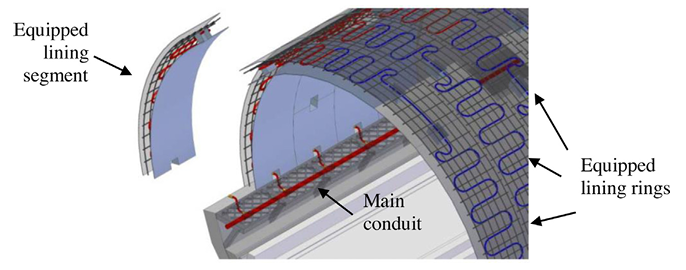
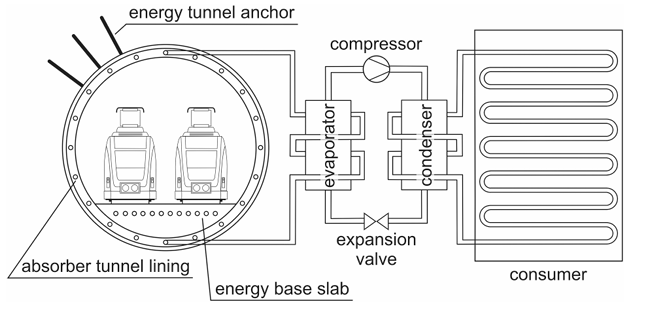
of thermally activating them by integrating heat exchangers; thermally activated tunnels
(energy tunnels) are a representative application. Thermal activation of tunnels offers
strong potential owing to their large contact area with the ground, an essential advantage
underpinning this feasibility study. This work assesses the technical and economic fea-
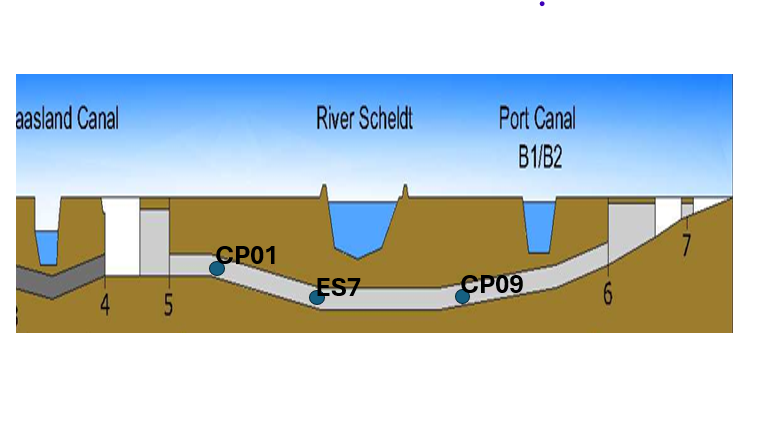
sibility of thermally activating the Liefkenshoek railway tunnel (Belgium) by evaluating
both the exploitable geothermal potential and the project’s profitability. To this end, an
analytical heat transfer model was developed and tested under different conditions. The
analysis also accounts for variations in several key parameters: the inlet temperature of
the heat transfer fluid, its flow rate through the exchanger, and the air temperature inside
the tunnel. The results indicate that water saturated sand yields the highest geothermal
potential, and under specific conditions, an exploitable potential of 27W/m² was identi-
fied. Finally, the economic assessment indicates that, under suitable operating conditions,
the project is economically viable, with the heat production cost remaining significantly
lower than the typical selling price observed on district heating networks. This work,
therefore, contributes to the valorisation of existing infrastructure within the energy tran-
sition and recommends the systematic integration of thermal activation in future tunnel
construction projects.
Fichier(s)
Document(s)

 Feasibility_of_geothermal_energy_in_Tunnel_TFE_Final_Version.pdf
Description:
Taille: 13.32 MB
Format: Adobe PDF
Annexe(s)

Citer ce mémoire
L'Université de Liège ne garantit pas la qualité scientifique de ces travaux d'étudiants ni l'exactitude de l'ensemble des informations qu'ils contiennent.
